The octagonal tower rising above St Mary’s Lane has stood since 1803, grinding grain through six generations of millers and two centuries of Havering history. Today, Upminster Windmill turns again thanks to a seven-year volunteer effort that transformed a decaying relic into a thriving community heritage site.
A Landmark Reborn
In September 2023, the sails of Upminster Windmill resumed turning for the first time in years. The reopening marked the completion of a restoration project that began in 2016, undertaken by the Friends of Upminster Windmill in partnership with the London Borough of Havering.
The Friends of Upminster Windmill, a charitable incorporated organisation registered as number 1162180, has managed the site since taking over operations. Their work combined professional craftsmanship with extensive volunteer labour. Dutch millwright Willem Dijkstra led the specialist restoration, while volunteers handled much of the internal machinery repair.
From Commercial Mill to Community Asset
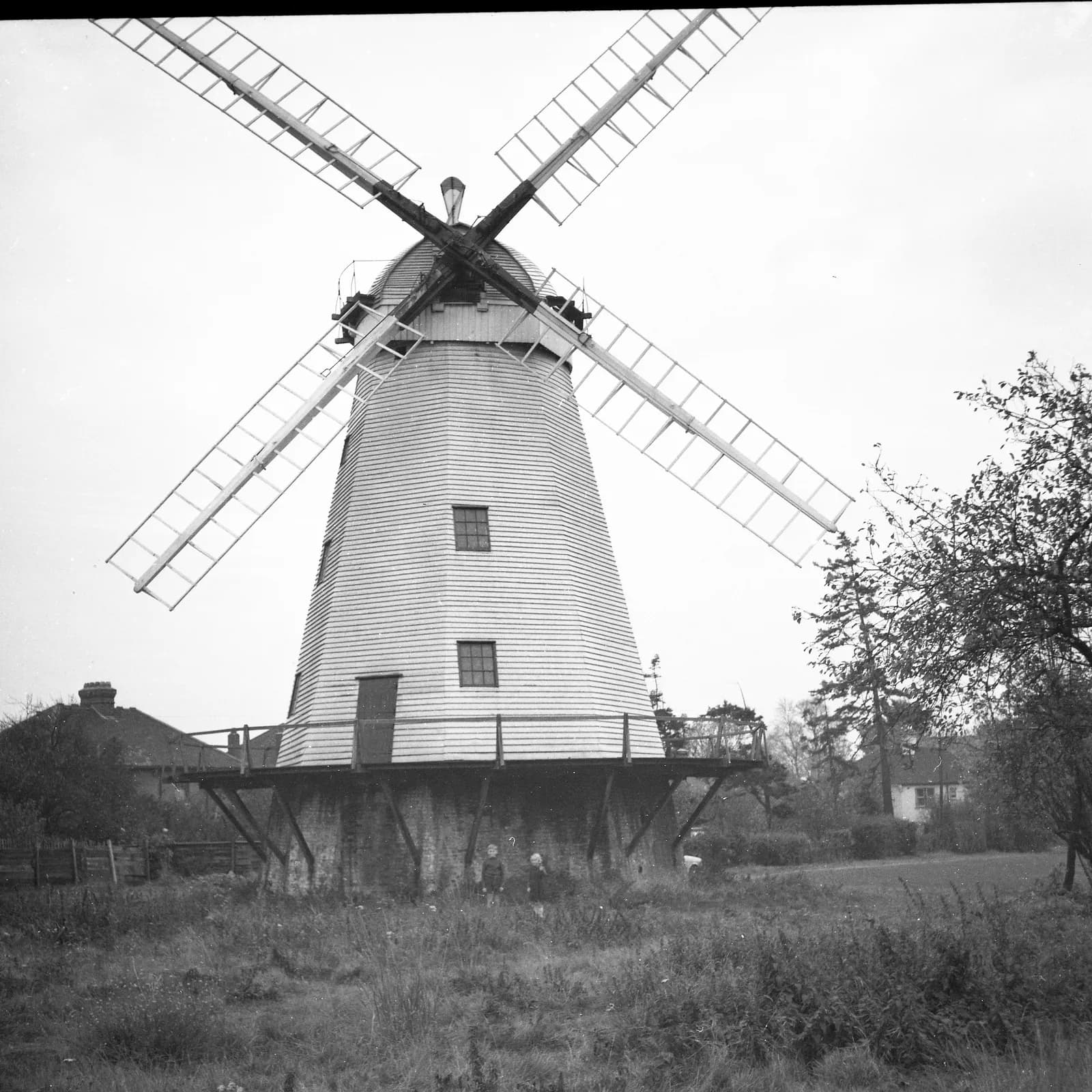
James Nokes built the windmill in 1803 on land transferred from Bridge House Farm. The four-storey smock mill, resting on a single-storey brick base, was an ambitious structure. Standing 52 feet to the top of its boat-shaped cap, it featured an external gallery and a six-bladed fantail carved with the date 1799.
The mill was advanced for its time. A Boulton and Watt steam engine, added in 1811, allowed year-round operation regardless of wind conditions. By 1856, the mill drove six pairs of millstones. Thomas Abraham purchased the mill in 1857, and his family operated it until commercial milling ceased in 1934.
After passing through several owners, Essex County Council acquired the mill in the late 1930s. It received Grade II* listed status in 1955, and ownership transferred to the London Borough of Havering in 1965 following boundary changes that brought Upminster into Greater London.
The Seven-Year Restoration
By the early 21st century, the windmill had fallen into disrepair. Storms in January 2007 damaged a stock and sail. Although two new sails were fitted in August 2008, structural problems persisted.
The major restoration began in 2016. The project removed the cap and sails that year, followed by the external gallery and weatherboarding. Scaffolding and protective wrapping shielded the structure while brickwork was refurbished and structural timbers repaired.
New weatherboarding and a replacement external gallery were installed. The cap itself was refurbished in a Dutch workshop, and four new sails were constructed in the Netherlands. Funding came from the National Lottery Heritage Fund and the Veolia Environmental Trust.
The restoration also added a new visitor centre and relandscaped the garden area with wildflowers. Volunteers played a central role throughout, from machinery repair to grounds maintenance.
A Living Heritage Site
The windmill is now open to the public on selected days throughout the year. The 2026 open days include dates in June and July, with the sails turning when weather permits.
Visitor numbers have grown steadily since reopening. More than 3,200 people attended open days in 2025, a 41 per cent increase on the previous year. Over 1,500 visitors toured the interior of the mill.
The site has developed an educational programme for local schools. Key Stage 1 and 2 workshops attract pupils from Havering and neighbouring councils. The gardens have also gained recognition, winning awards at the London in Bloom competition in October 2025.
What Makes a Smock Mill
Upminster Windmill is the last working smock mill in East London and one of only nine surviving windmills in Greater London. The term "smock mill" refers to the distinctive shape: an octagonal, weatherboarded tower that resembles the smock worn by agricultural workers of the period.
The mill retains four pairs of millstones: three French Burr stones and one pair of Peak stones. The patent sails are mounted on a cast-iron windshaft salvaged from a post mill near Maldon in 1899, after the original windshaft snapped in a storm on 5 January 1900.
How to Get Involved
The Friends of Upminster Windmill continue to recruit volunteers for roles including tour guides, education leaders, garden maintenance, and catering. The organisation describes its mission as serving heritage, education, and community.
The windmill stands as proof that volunteer effort can preserve historic structures for future generations. From the 1948 Windmill Committee to today’s Friends group, local residents have sustained this piece of Havering history for more than 75 years.